

Swisca News
Innovative level measurement at the speed of light
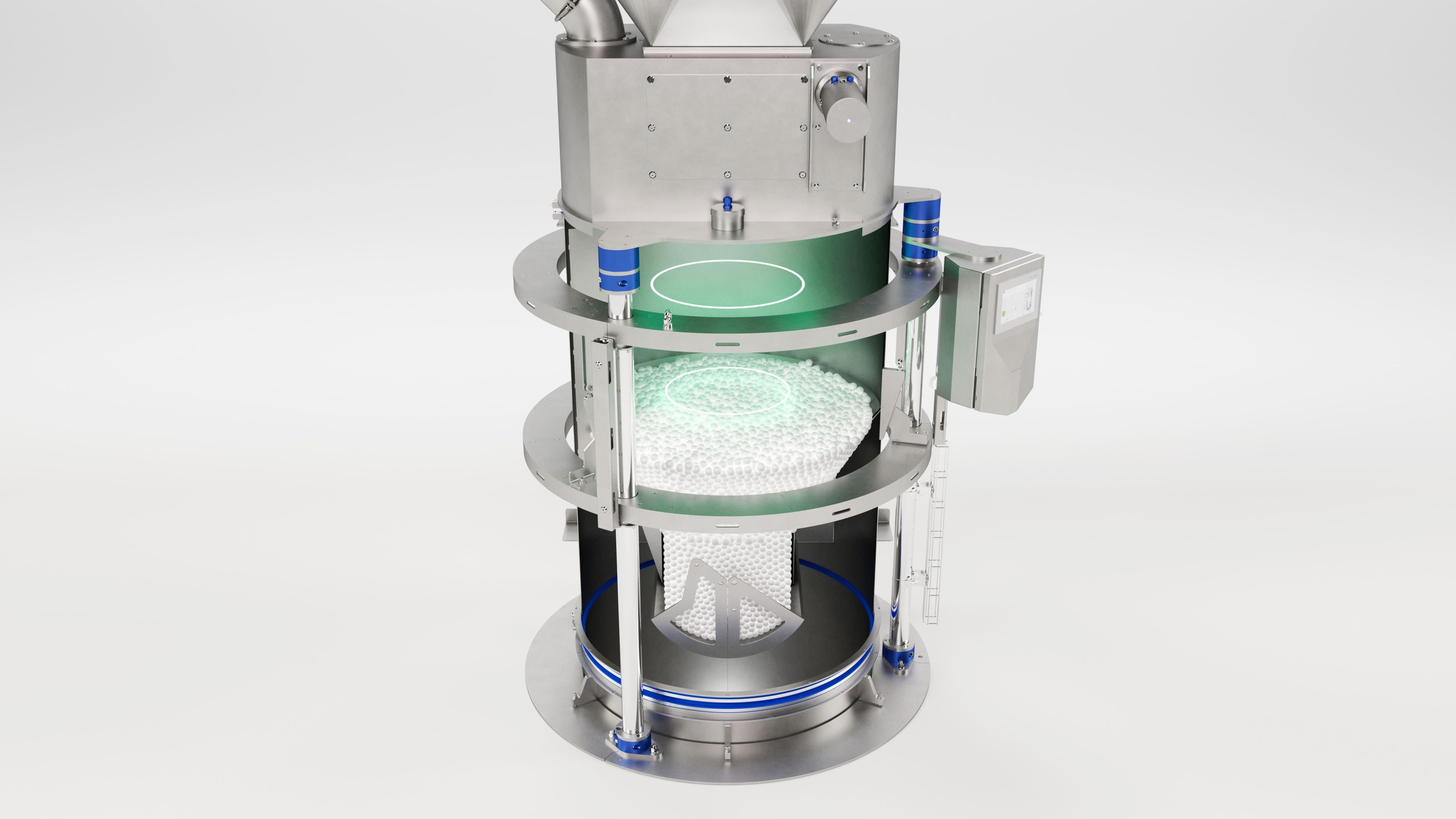
Due to increasing automation, more and more intelligent sensors are being used for innovative applications in the milling industry. An important group of sensors for process control are probes for high and low level detection of bins and silos, accumulation protection, flow monitoring, range measurement and position tracking. Most frequently installed solutions of point level sensors are rotary level indicators, capacitance probes and vibrating rods in the milling industry.
Rotary level sensors have been proven for point level indication in bins and silos for granular bulk material. A rotating paddle is continuously rotated by a motor. When this paddle contacts with the material, the force overcoming the rotating torque of paddle will stop its cirular movement . The level switch detects the stop of rotation and produces a signal to the control system. A fail-safe rotary level sensor is a well-known solution to starting or stopping a critical process in the grain industry. Capacitive level measurement has been a well-established method of measuring levels for decades. The bulk material causes a change in capacitance at the sensor, which is converted into a switching signal. With changing product characteristics, repetitive probe calibrations are necessary and with products with low bulk density no reliable detection occurs.
Capacitive probes are also sensitive to dust deposits. In the case where vibrating rods are brought into resonance frequency by piezoceramic elements, the bulk material covers the sensor, the amplitude is damped and a message is triggered. These probes can be used in different installation positions and are more independent of the product characteristics. Technological progress in the development of sensors is advancing. The trend in level measurement in environments with high levels of dust has been toward non-contact sensors and particularly radar distance measurement. Radar is the abbreviation for «radio detection and ranging» which means «radio-based location and distance measurement». This technology is based on electromagnetic waves. A radar device emits a concentrated electromagnetic wave, which is reflected by objects as an echo and then evaluated by the device according to various criteria. The electronics generate an electromagnetic pulse when the wave hits the material surface, some of the energy is reflected. This so-called echo signal is recognized by the sensor and converted into a fill level indication by means of a transit time measurement. The transit time is the time difference between the transmitted pulse and the received echo signal. Since the speed of propagation of an electromagnetic wave in the carrier medium air can be equated with the speed of light, this simple relationship can be used to calculate the distance to the media surface. The level can be accurately measured in dusty environments using radar technology.
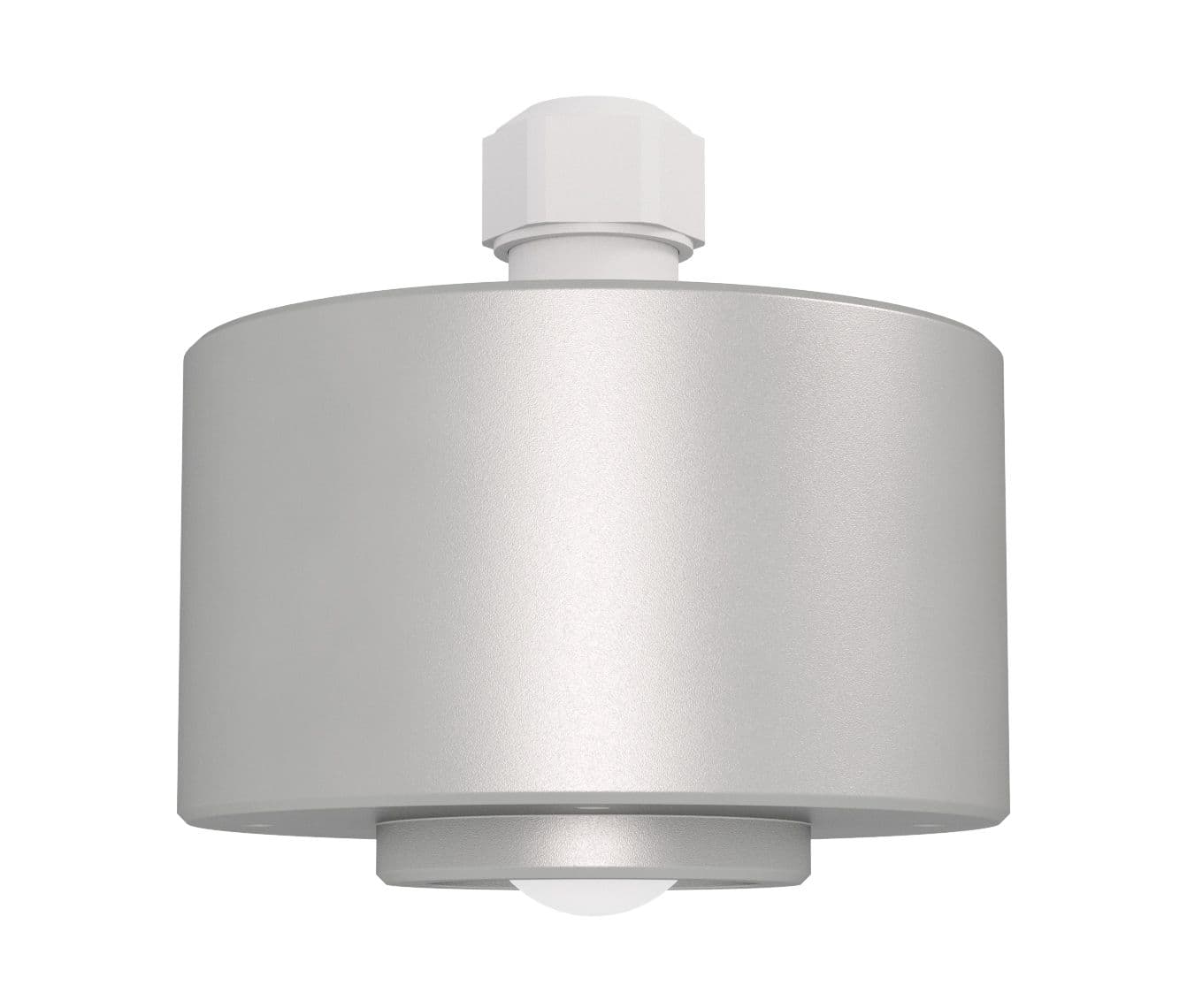
Radar-based sensor technology is able to provide highly accurate distance data needed for precision object detection, range measurement and position tracking applications. Millimetre scale resolution can be achieved at high update frequencies. However, when integrating radar technology into smart product designs, product developers are typically forced to choose between low power consumption and high accuracy. The requirement for accuracy also increases with limited power levels, as this technology is advantageous with a reduced power budget. SWISCA has developed an innovative distance measurement solution for milling applications that combines the accuracy of advanced coherent radar methods with the lower power requirements of pulsed radar systems. Lower power consumption is achieved with pulsed radar systems when the transmitter is switched off between pulses. Conventional coherent radar systems transmit a continuous sequence of pulses and use the accurate phase measurements of the returning signals. This requires high power consumption and associated higher power dissipation and larger electronic components. With its picosecond scale time resolution, the SWISCA sensor is capable of measuring distance with millimeter accuracy over a range of 100mm up to two meters and at the same time use it in low-powered devices. There is always the question of the level of the frequencies with radar level measurement devices. While contact-free radar sensors work with high frequencies of up to 130GHz, the guided microwave technology uses a comparably low frequency of 1GHz. In general, it can be said that low frequencies are significantly less susceptible to process-related interferences such as build-up and dust. When developing the radar sensor from SWISCA, the product developers focused on robustness and reliability in dusty environments and used the frequency range of 60Hz.
The trend towards process optimization with intelligent sensors in the milling industry not only permits new applications but also supports the millers and improves their operational excellence. Electronically generated electromagnetic pulses with accurate phase measurements of the returning signals of a specially developed sensor for the level measurement in the milling industry open up new opportunities to improve operational excellence. This next generation of radar sensor is reliable, robust and dust insensitive, requires no recalibration, achieves higher accuracy and is a major step forward in meeting the high demands for overall level measurement in the milling industry.
