

- SWISCA
- Whitepaper
Whitepaper
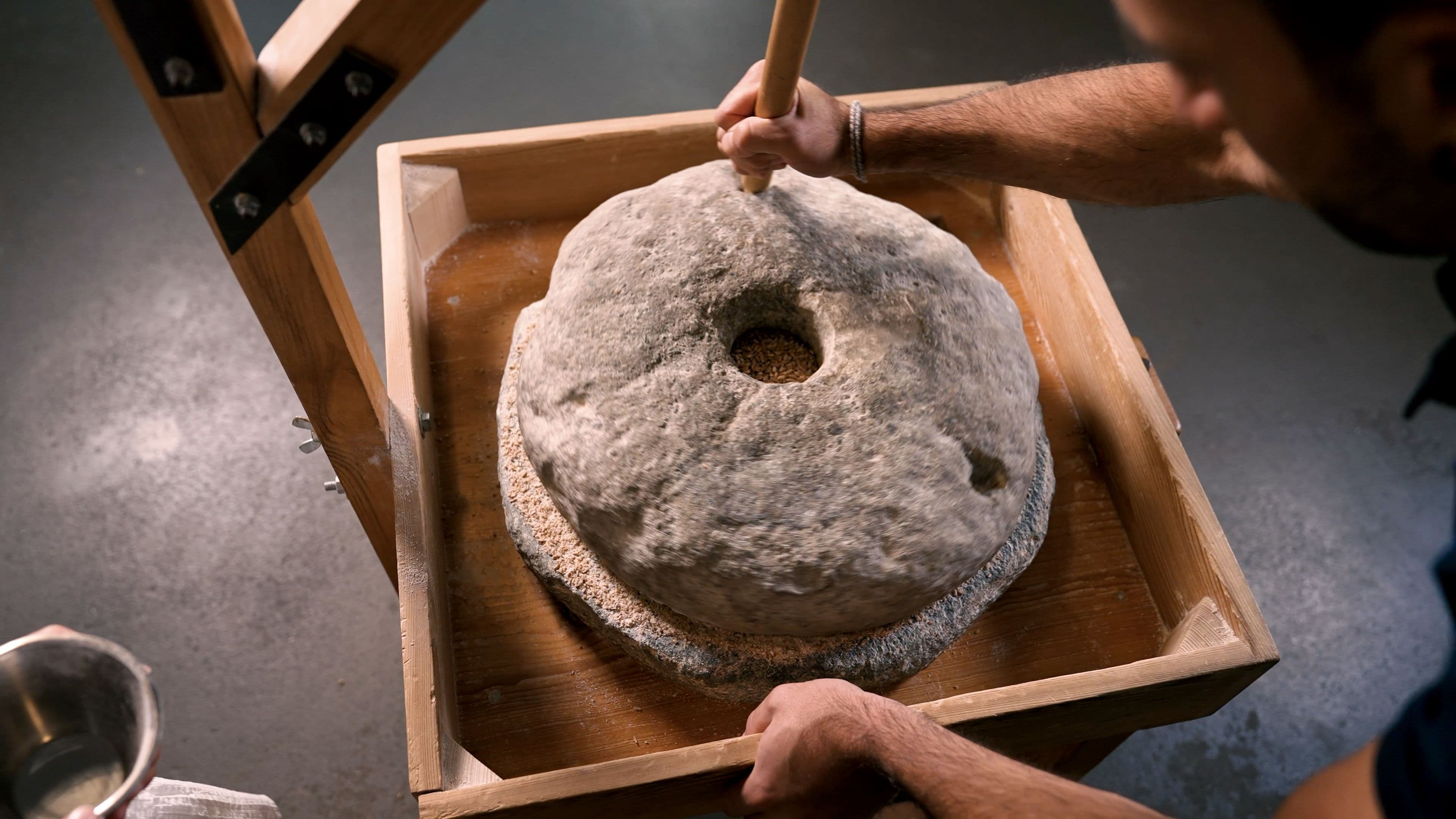
Roller Mill Drive – Whitepaper ROMIL
The crushing of cereal grains has historically been accomplished through pressure and shearing. Approximately 27,000 years ago, grinding stones were first employed for this purpose. Utilizing an oscillating motion of the grinding stone against a stationary surface, the grain trapped in between could be effectively processed.
In many subsequent developments, the principle of maintaining one grinding surface stationary while the other moves relative to it was preserved. This is achieved, for example, through a horizontal or vertical pair of disks, a cone with a counterpart, or a roll with an adjacent counter surface. In all these variations, the stationary mating surface doesn‘t actively engage in the grinding process; it primarily absorbs forces without undergoing movement. This paradigm shifted with the advent of roller grinding in the 18th century.
The movement of the previously stationary counter surface was recognized to offer several advantages. By configuring it as two parallel, counter-rotating rolls operating at distinct speeds, pressure and shear could be precisely controlled as influential variables, independently and purposefully. This setup enabled enhancements such as increased throughput and desired selective grinding. Thanks to many other parameters, multi-stage, sophisticated grinding processes were developed.
From the perspective of machine manufacturers, one aspect of roller grinding stands out: the „overdrive,“ which refers to the coupling of the two roll speeds. The technically straightforward design, consisting of two differently sized intermeshing spur gears at one end of the roll pair, represents an ingenious solution. In the configuration typical for grain roller mills, the slow roll must always be braked to maintain the desired speed ratio. However, if the grinding speed ratio remains constant, the considerable braking force applied to the slow roll can be efficiently transferred back to the fast roll via spur gears.
In a typical roll pair, the fast roll is powered by an electric motor, which in turn drives the slow roll through the material in the grinding gap. The overdrive mechanism prevents the slow roll from reaching the speed of the fast roll and redirects the braking power back to the fast roll. Consequently, a significant amount of mechanical power is effectively circulated.
Measurements indicate that the braking power on the slow roll is notably high in comparison to the power introduced into the roll assembly. On smooth passages, this braking power typically exceeds the grinding power by a considerable margin. Therefore, it is paramount that this excess power is efficiently transferred back to the fast roll.
The rolls become tense due to the ground material and the overdrive. A torque ratio can be calculated from the measured torque on the rolls, which typically falls within a certain range under typical operating conditions for roller mills. The influences on this torque ratio are complex. The braking power is determined by the speed ratio and the above torque ratio:
– The lower the speed of the slow roll compared to the fast roll, the lower the required braking power.
– The greater the tension between the rolls, the greater the required braking power.
Of course, the above does not address the effective grinding power, which is the power converted as the difference between the drive and braking power in the grinding gap.
Pressure can be easily varied during operation by means of a variable grinding gap. Conversely, varying shear, generated by altering the speed ratio during operation, comes at a high cost. This can be achieved by feeding back the braking power with associated losses and/or through a technically complex machine design. As a result, the flexibility gained through a variable speed ratio has often been overlooked, optimized only for specific processes and kept constant for the majority of operations..
The comparison of the two passages indicates that the performance of the reduction passage surpasses that of the break passage, despite its lower grinding capacity. Of course, this also applies analogously to less heavily utilized passages.
Nowadays, the simplest method to incorporate a variable speed ratio during operation is to equip each roll with its own motor and link the corresponding frequency converters in the intermediate circuit This individual roll drive can be configured as a direct drive or as a remote motor with belt drive. In such a system, the braking power from the generator-driven motor of the slow roll is dissipated from the system and reintroduced via the motor on the fast roll. Consequently, the motor on the fast roll must be chosen considerably larger than in a roll package with a fixed speed ratio.
In order to fully utilize the degree of freedom in a roll assembly with a single roll drive, the rated torques or rated power of the components must be sufficiently high. This aspect should not be underestimated. Conversely, there is no need to worry about the generally unknown power flow with fixed overdrive. If the power transmission from the fast roll to the product to the slow roll is high, then the overdrive power is high, resulting in more power being circulated. This does not impact the required drive power and the typical assumptions for power requirements (kW per t/h) used in calculations.
However, this is not the case with the single roller drive. The intricate power transmission in the grinding gap directly affects the required drive and braking power and the selection of component sizes, as the power must be entirely extracted and reintroduced electrically into the assembly. Incorrect drive and braking power can result in reduced throughput, the need to decrease grinding work, or the inability to maintain the optimal speed ratio for the process.
In a grain mill, there are numerous break and reduction passages where a variable speed ratio during operation may not be beneficial. However, variability can be advantageous for specific passages to enable the production of specialized products. For instance, this could include a grist passage where, in extreme cases, the fluting position (back/back to cutting edge/cutting edge) is changed, or a smooth passage where a notably high shear is desired with a high-speed ratio.
Energy efficiency can be achieved through the optimization of the mill diagram and the use of energy-efficient machinery. The recovery of energy, which must first be added to a system, leads to poorer energy efficiency. The power losses are greater with individual roller drive, as energy recovery for this application is not energy efficient.
If the variability of the speed ratio is required for the production of special products, this can be easily implemented for selected passages with individually assigned motors. The technical simplicity and high efficiency of the traditional belt drive transmission are advantageous for an energy-efficient roller mill. In combination with modern product level control and feeding, as well as precise adjustment and stability of the grinding gap through robust roll packages, an overall energy-efficient milling process can be achieved. For technical systems, only the required energy in a suitable form should generally be supplied for optimal energy efficiency.
The trend towards process optimization with sustainable machines in the milling industry not only saves costs and supports millers in their work. Innovativesolutions optimize energy-efficient and food safe processes and thus the work of the operating personnel.
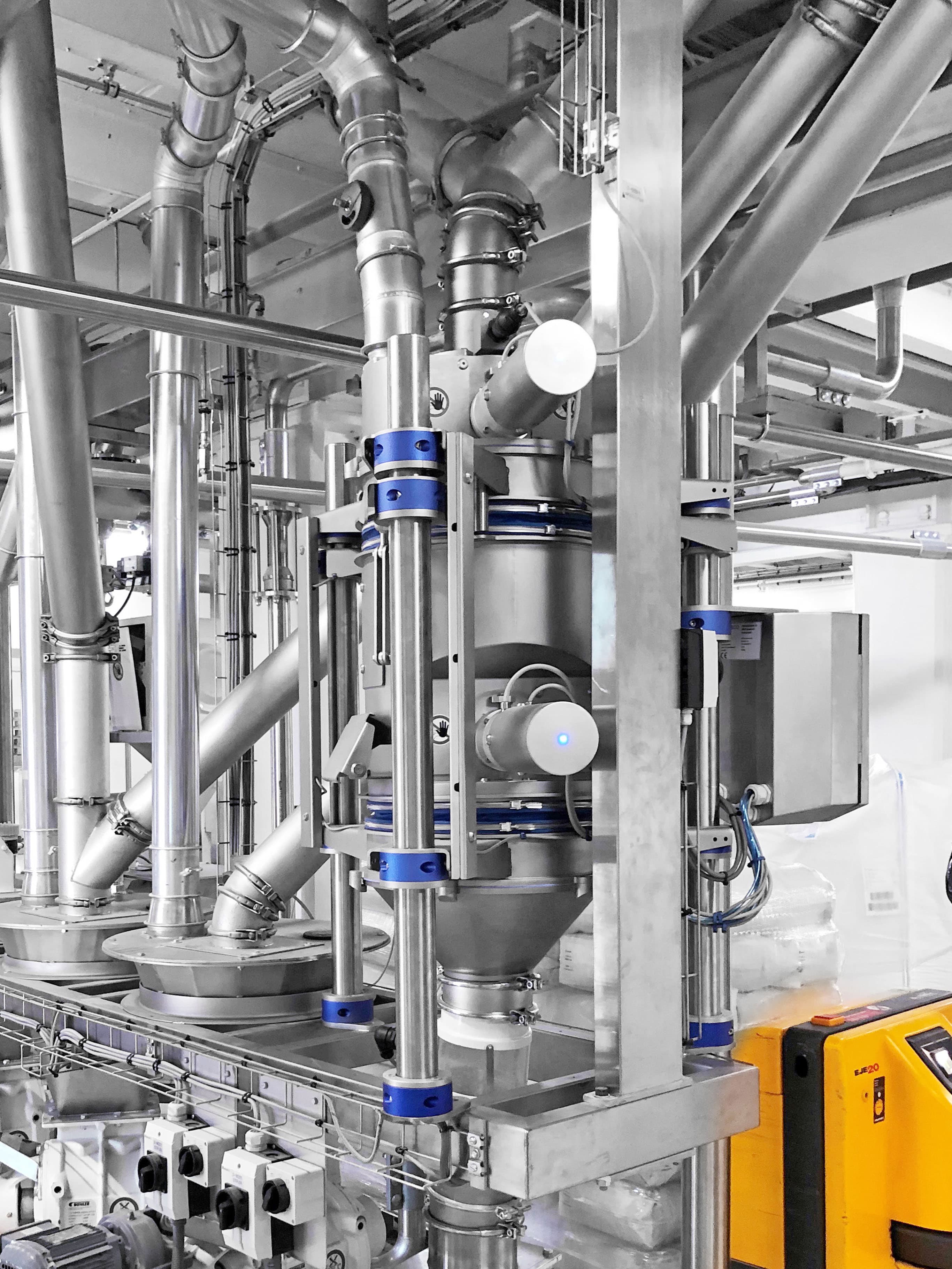
Process optimisation for the milling industry
Digitalizing data and making data available for electronic data processing is a trend in the milling industry. Fewer errors and falsifications are occurring or errors can be excluded in comparison to analogue processing. In the operational processes of a mill operation, digitalisation enables an increase in efficiency and thus an improvement in its economic efficiency. The data generated in digital form with innovative, high-precision weighing systems are also suitable for optimising processes.
For example, by measuring mass flows, the density and moisture of oat flakes, the production processes can be optimized and automated with electronic data processing systems. In order to ensure a constant quality of the end products, the parameters of flaking and drying must be continuously monitored and, if necessary, adjusted. The generated data are also used in digital form for an optimal composition of grain mixtures and for the regulation of a predetermined capacity with quantity controllers, thus improving the accuracy of the dosing. Measurements of several force components and vibration measurements of the impact plate system allow highest precision by means of electronic data processing.
The heart of the scales, flow controllers and micro dosing scales for the mill industry is the control system. A state of the art control of weighing system is equipped with very robust, userfriendly and reliable touch screen. Web server modules for cloud solutions and remote maintenance enable optimal data access and use for yield calculation, product traceability and inventory. Scales can be operated autonomously or connected to a plant control system and ERP systems. Ethernet-based ProfiNet and EtherNet/IP fieldbus modules or Profibus and the RS 485 interface are used for this purpose. In case of a power failure, the scales close in a controlled manner and all data is saved in the scale control system. In many mills, scales with 20 to 30-year-old controls are installed. Spare parts are often no longer available, and the interfaces are obsolete. Scale controls can easily be replaced by a moderncontrol system and the production data can be optimally used.
The trend towards process optimization with intelligent weighing systems in the milling industry not only saves costs and supports the millers. Digitalization and a sensible application of technical possibilities open new opportunities for data acquisition and process regulations and thus facilitate the work of the operating personnel.
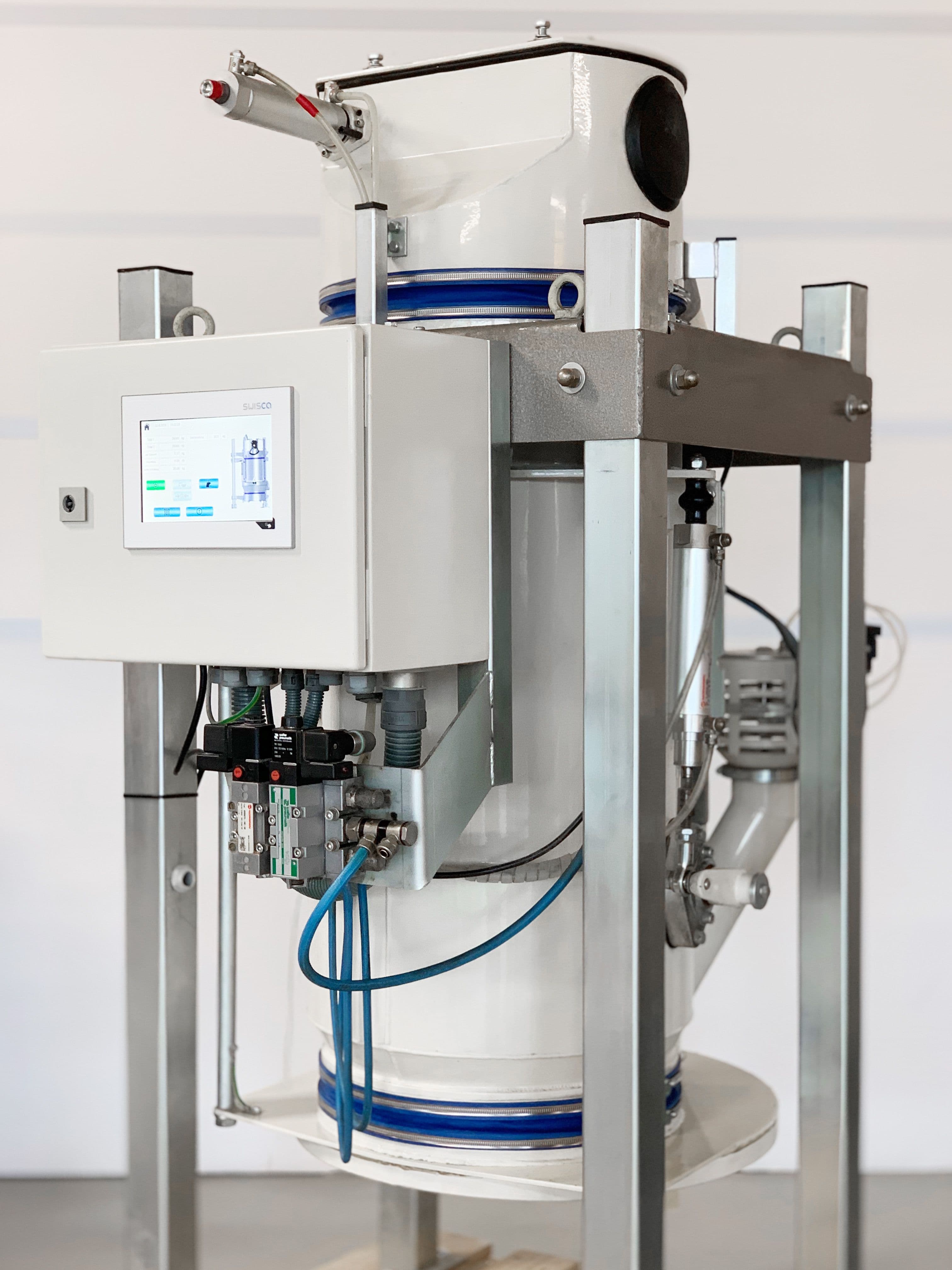
Control retrofit for scales
The organization of the digital strategy and transformation is individual for each company in the mill industry. The prerequisite for successful implementation of the digital strategy is detailed planning of the roadmap and the necessary activities. Any digital strategy without operationalization is ineffective. In the operational processes of a mill, digitalization enables an increase in efficiency and thus an improvement in its profitability. Information is increasingly being stored digitally and made available for electronic data processing.
The internal process control by means of precise weight measurements has gained in importance. Production processes and the expected product quality define the required accuracy and measurement parameters for process monitoring and quality assurance. The data generated in digital form with IoT-compatible weighing systems are also suitable for optimizing quality and processes online. Control retrofits enable connectivity and extend machine lifetime. Outdated control generations lack connectivity to a fieldbus or the ability to connect to the Internet to take advantage of remote maintenance and cloud solutions. For appropriate digitization, data must be accessible and freely usable. Cloud solutions and remote maintenance enable optimal data access and use for internal process control and product traceability. Modern scale controls are equipped with a web server module and touch screen, robust and reliable.
The operationalization of the digital strategy in the milling industry requires suitable connectivity for IoT, cloud solutions and remote maintenance. Control retrofits for weighing systems extend machine lifetime economically and enable digital data to be freely accessible for electronic data processing.
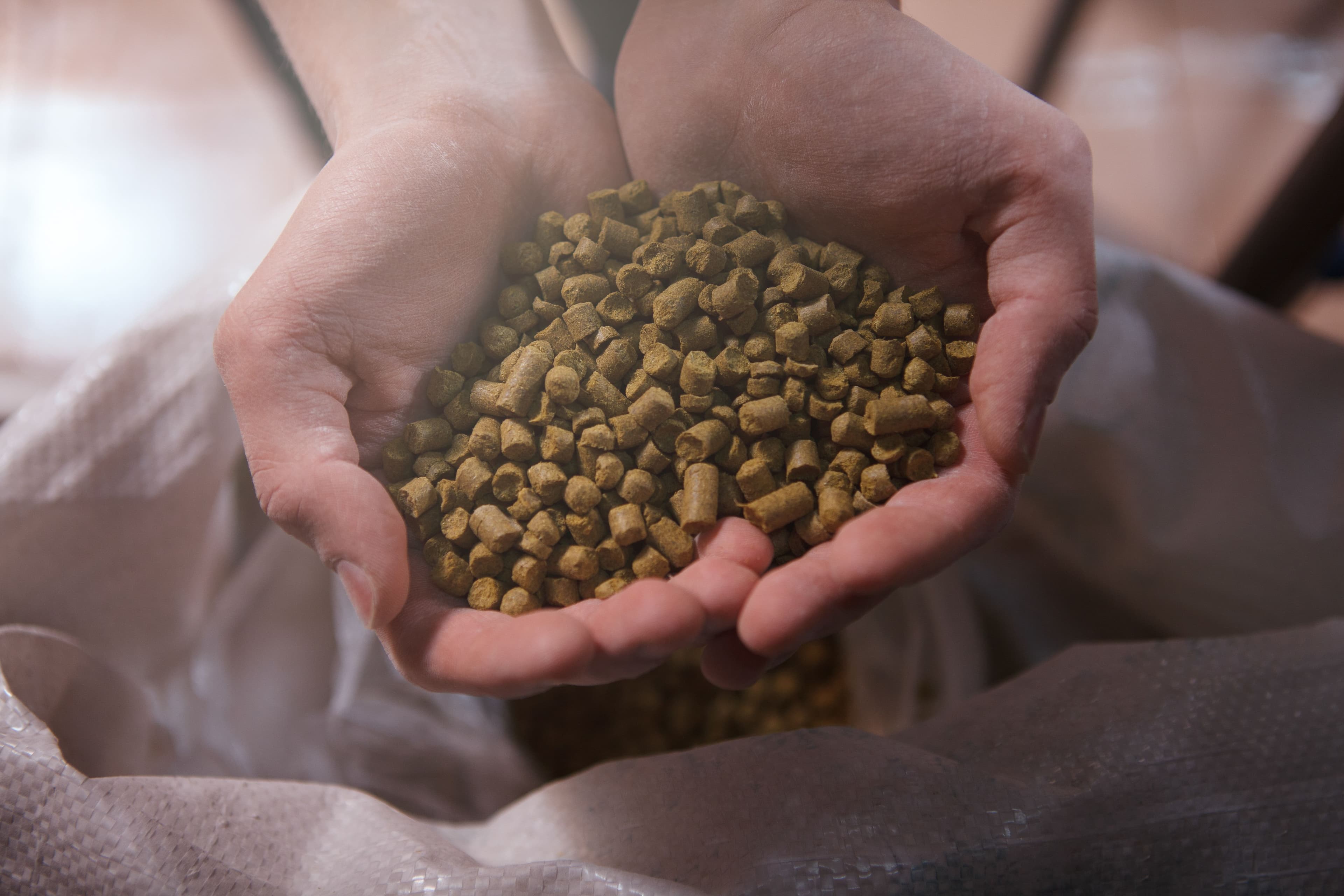
Hop dosing from SWISCA
Water, malt and hops are the basic ingredients of beer. Water is the basis, malt provides the strength and hops the aroma. Hops are the most expensive of the three raw materials. Why is hops in beer so important? The ingredients bring a spicy-bitter, tart or even fruity taste and have a calming, preserving and foam-stabilising effect. Hops is a climbing plant and belong to a plant genus from the hemp family. Female plants carry valuable umbels which contain resins and essential oils and lend flavour and bouquet to beer.
In Switzerland in the village of Appenzell, directly at the foot of the Alpstein, the Locher family brews a very special beer. According to exact recipes, with hops and malt, and the fresh water from the legendary Alpstein, directly from the source. This makes Appenzeller beer special and unmistakably tasty. The fifth generation of the family brewery is creating new types of beer. The innovative spirit of this specialty smithy is the source of the enormous variety and high quality. Appenzeller beer is exported to Germany, England, Russia, Canada, Taiwan, Japan, USA and Singapore, among others. The start-up SWISCA AG was founded in Appenzell in 2018 by experienced experts in the development, design and distribution of food processing and weighing technology. The focus on quality and innovation is essential for SWISCA AG. Thanks to best technology and experienced engineers, SWISCA AG realizes innovative product developments and food processing plants for the world market.
To produce special beers, the Appenzeller Brewery Locher and SWISCA AG jointly developed an innovative weighing system for the exact dosing of hop pellets. The consistency of the process technology guarantees a high product quality of the innovative beer varieties. The combination of excellent brewing art and new weighing technology was made possible by the New Regional Policy of the Swiss Confederation, which promotes projects that strengthen innovation, added value and competitiveness of rural regions in Switzerland. The financial aid granted from the Regional Development Fund is shared equally between the Swiss government and the canton. The project enabled the value chain within the Canton of Appenzell to be extended. Image carriers and the positively perceived products from the region strengthen the business location. The project contributes to the promotion of cutting-edge technology, digitalisation and securing of attractive jobs.
Measurements of humidity, mass flow, weight, temperature and density
Digitalizing data and making data available for electronic data processing is a trend in the milling industry. Fewer errors and falsifications are occurring or errors can be excluded when moisture, mass flow, weight and density are measured at a single point in real time and digitally processed. In the operational processes of a mill operation, digitalisation enables an increase in efficiency and thus an improvement in its economic efficiency. The data generated in digital form with multifunctional measuring systems are also suitable for optimising quality and processes online.
In the milling industry, accurate weight measurement has gained in importance. The production process and the expected product quality define the required accuracy and measurement parameters for process monitoring and quality assurance. In addition to recording mass flow and weight, multifunctional weighing systems can also measure and digitally process humidity, temperature and density at a single point in real time. The cost and error of real-time digital measurements is less than the time-consuming process of manual sampling, analysis and evaluation in the lab and manual process control. Cloud solutions and remote maintenance enable optimal data access and use for internal process control and product traceability. Ethernet-based fieldbus modules ProfiNet and EtherNet/IP or Profibus and the RS 485 interface are used for this purpose.
The trend towards process optimization with multifunctional weighing systems through the measurement of moisture, mass flow, weight, temperature and density in the mill industry not only saves costs and supports the miller in his work. Reasonable digitalization optimizes the process control and thus the work of the operating personnel.
Improved Grain conditioning for consistently high Milling Yields
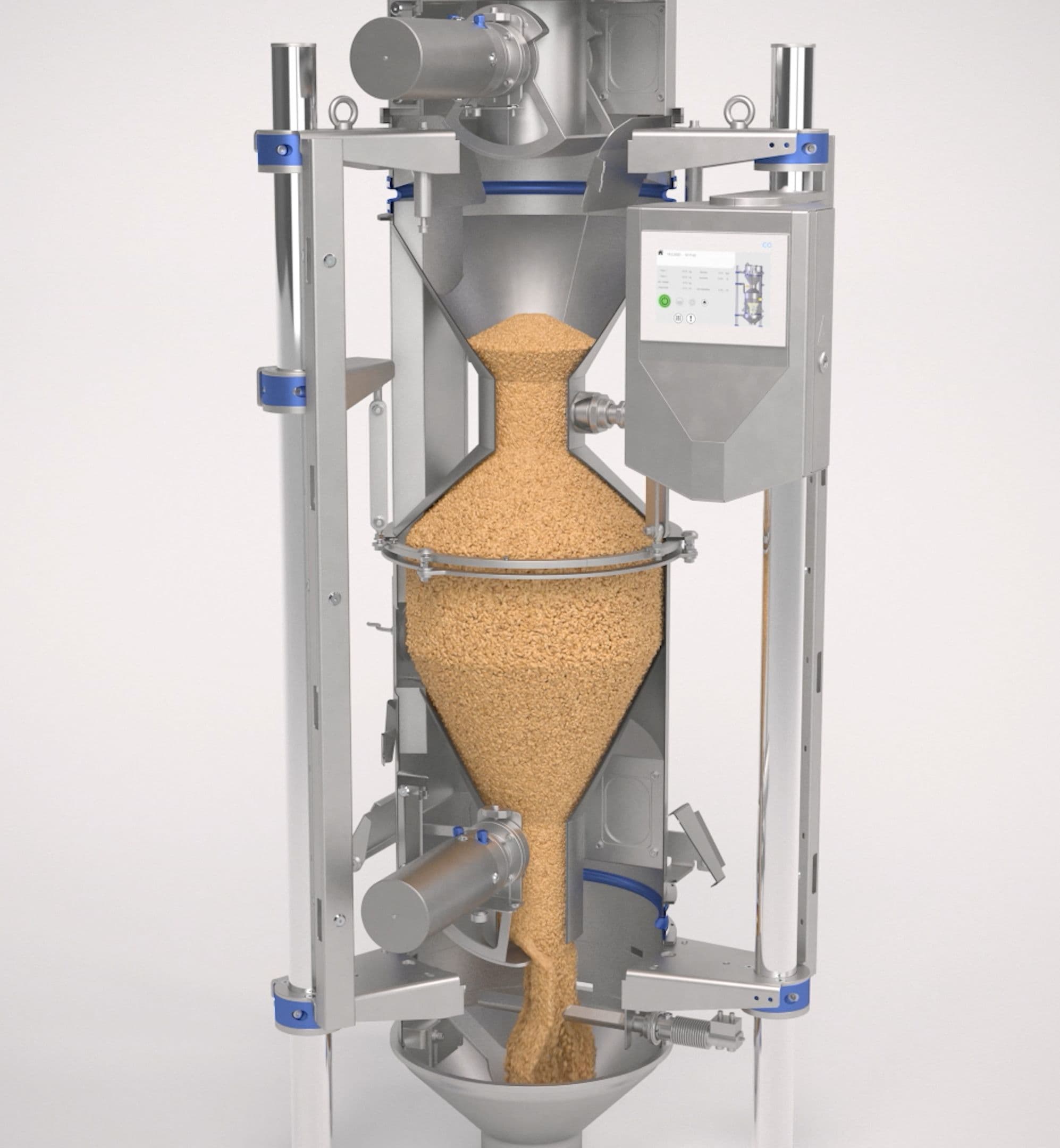
Dampening is a key production process in a mill to support uniform grinding conditions and set the basis for consistently high Milling Yields. Dampening Grain results in two important benefits for the first preparing the grain for optimal grinding conditions and secondly adding water for commercial gain. By adding water to grain and tempering it in, the bran layers become tough and elastic, the endosperm is mellowed. This is the optimal condition for separating them most efficiently during the grinding process. In order to get most benefit out of the dampening process, it is important that the water is distributed as uniformly as possible onto the surface of the kernel, allowing it to penetrate evenly into the endosperm in the tempering bins. Dampening is traditionally an energy-intensive production process and is critical in terms of sanitation and therefore food safety. In addition to the technological and economical aspects, microbiological impact has gained in importance. The requirements to meet or exceed food safety standards are increasingly challenging.
Besides measuring the product throughput online, the differential dosing scales are used in addition to other constant and accurate measurements on grain, such as moisture, density and temperature. For an accurate data collection from the grain, required for the milling process, product temperature, density and product moisture content are necessary. The measurement of mass flow and product moisture depends on density. An innovative control system allows easy calibration of the capacitive moisture sensor and accurate comparison with empirical values determined in the laboratory. Differential dosing scales with innovative additional equipment measure the mass flow and register the total weight with even higher accuracy than conventional equipment. State-of-the-art control technology and weighing algorithms, process the measurement after the dosing slide even when the scale is refilled. This additional impact measurement eliminates uncertainties when refilling the scale and is improving the measurement accuracy by approximately. Thanks to this additional measurement, the system always works gravimetrically, and the opening of the dosing slide can be monitored and readjusted continuously. The advantages of the high accuracy and the continuous process of a differential scale are optimally combined. The improved accuracy of the scale is an advantage for providing consistent dampening conditions allowing for very precise water addition.
The automatic liquid flow controller and the differential dosing scale with the moisture determination system are optimally matched to each other for an exact addition of the water quantity. The differential dosing scale measures the product flow rate and moisture simultaneously. The control system calculates the required water quantity and controls the liquid flow meter and the dosing slide very precisely. The continuous measurement and control of mass flow, moisture, temperature and the calculation of the required water addition with a multifunctional weighing system enables efficient process control. High-quality control valves with electromotive positioners and energy storage enable a wide dosing range. The accuracy of the metered quantity of water is significantly impacted by the quality and accuracy of the flow meter. A correctly designed water filter is essential to separate any contamination that could be caused by the water. The automatic liquid flow controller is also suitable for chlorinated water (55°C, 600 ppm) or steam and is manufactured in a sanitary design and consists of stainless steel. There is no need for any additional electrical control unit to measure water flow or moisture content in grain.
Grain dampening in milling is a commonly used process. Water addition rates as high as 7% are possible with minimum abrasion and breakage of the product. In flour mills, dampening of wheat is a critical control point. Most dampening machines need to be cleaned on a regular basis. Once the machine is turned off, growth of germs and bacteria does occur. The negative impact is visible and is usually causing a distinct smell. The expected bacteria growth can be confirmed with Laboratory test data if required for reference. Inside conventional dampeners, abrasion dirt and remaining grains must be removed manually to avoid or limit contamination. If the dampener is not operated for a longer period of time, a potential risk of microbiological contamination of the grain that follows cannot be ruled out. When this contaminated wheat reaches the mill, the flour produced from it will also have an increased number of microbiological counts. Innovative dampeners minimise the risk of contamination and allow for automatic cleaning-in-place (CIP). Some situations are asking for a very small addition of water with an even distribution on the surface of the kernel. This can be a real challenge. In this case the machine shown below can be the correct solution. innovation of dampener forms the flow of the grain into a curtain by means of a baffle spike and slats. The added water is atomised into fine drops via nozzles arranged radially on both sides. These droplets collide with the falling grains and adhere to the surface. If the production process allows it, an automatic cleaning cycle is carried out in between. Extendable rinsing nozzles are actuated by the cleaning medium for optimum cleaning of the entire interior. The waste water of the cleaning process as well as the disposal of the collected residuals, is typically automated.
The trend towards process optimization with intelligent systems in the milling industry not only saves costs but also supports the millers and improves their operational excellence. Energy-saving solutions with accurate mass flow, density and moisture measuring, sanitary water addition technology, the resource-efficient dampening process and cleaning-in-place technology are designed to bring your Grain conditioning System to the next level. This next generation of moisture management system is sustainable, requires less equipment and plant controls, significantly less energy and is a major step forward towards meeting or exceeding the most stringent food safety standards.
Innovative level measurement at the speed of light
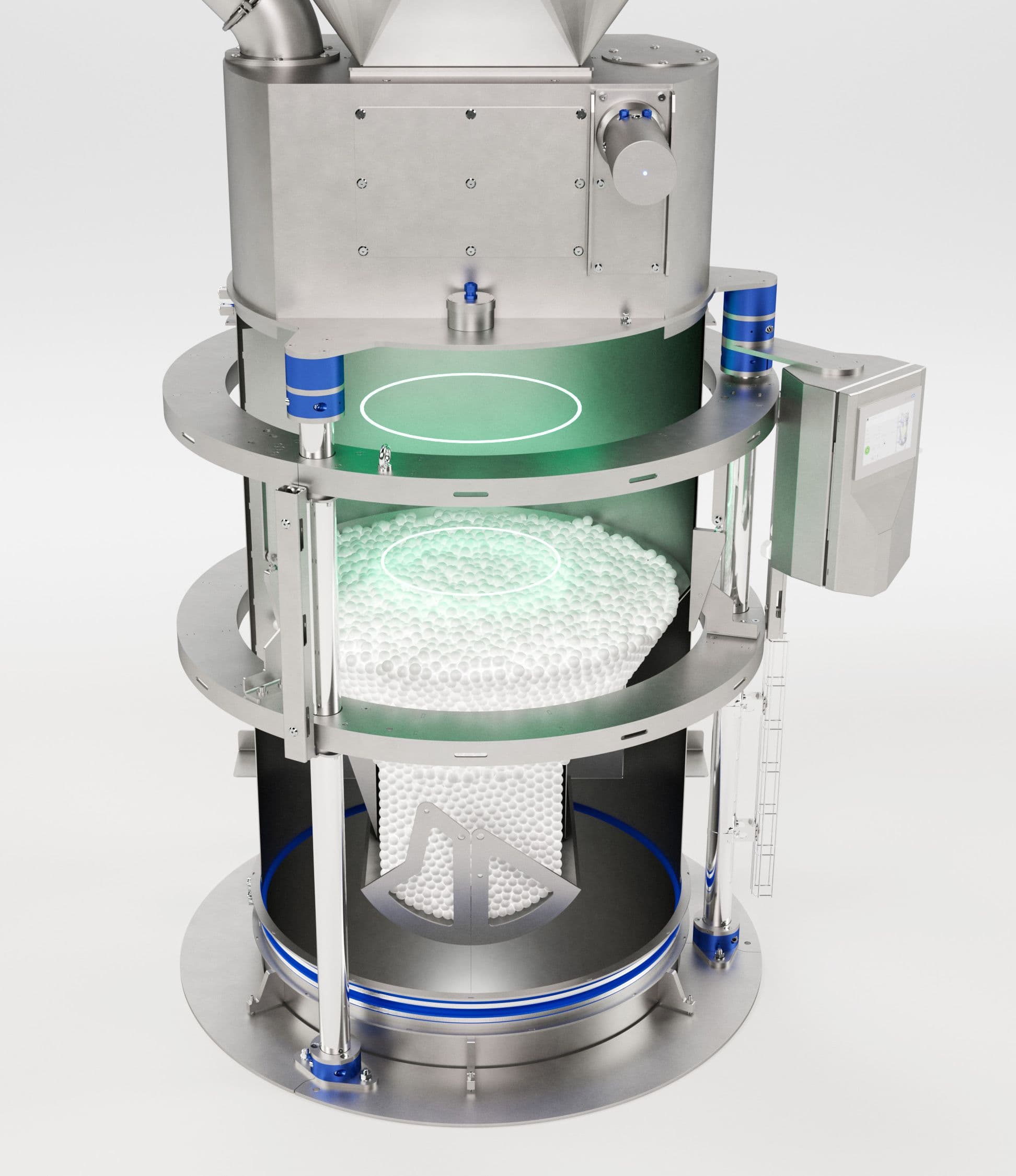
Due to increasing automation, more and more intelligent sensors are being used for innovative applications in the milling industry. An important group of sensors for process control are probes for high and low level detection of bins and silos, accumulation protection, flow monitoring, range measurement and position tracking. Most frequently installed solutions of point level sensors are rotary level indicators, capacitance probes and vibrating rods in the milling industry.
Rotary level sensors have been proven for point level indication in bins and silos for granular bulk material. A rotating paddle is continuously rotated by a motor. When this paddle contacts with the material, the force overcoming the rotating torque of paddle will stop its cirular movement . The level switch detects the stop of rotation and produces a signal to the control system. A fail-safe rotary level sensor is a well-known solution to starting or stopping a critical process in the grain industry. Capacitive level measurement has been a well-established method of measuring levels for decades. The bulk material causes a change in capacitance at the sensor, which is converted into a switching signal. With changing product characteristics, repetitive probe calibrations are necessary and with products with low bulk density no reliable detection occurs.
Capacitive probes are also sensitive to dust deposits. In the case where vibrating rods are brought into resonance frequency by piezoceramic elements, the bulk material covers the sensor, the amplitude is damped and a message is triggered. These probes can be used in different installation positions and are more independent of the product characteristics. Technological progress in the development of sensors is advancing. The trend in level measurement in environments with high levels of dust has been toward non-contact sensors and particularly radar distance measurement. Radar is the abbreviation for «radio detection and ranging» which means «radio-based location and distance measurement». This technology is based on electromagnetic waves. A radar device emits a concentrated electromagnetic wave, which is reflected by objects as an echo and then evaluated by the device according to various criteria. The electronics generate an electromagnetic pulse when the wave hits the material surface, some of the energy is reflected. This so-called echo signal is recognized by the sensor and converted into a fill level indication by means of a transit time measurement. The transit time is the time difference between the transmitted pulse and the received echo signal. Since the speed of propagation of an electromagnetic wave in the carrier medium air can be equated with the speed of light, this simple relationship can be used to calculate the distance to the media surface. The level can be accurately measured in dusty environments using radar technology.
Radar-based sensor technology is able to provide highly accurate distance data needed for precision object detection, range measurement and position tracking applications. Millimetre scale resolution can be achieved at high update frequencies. However, when integrating radar technology into smart product designs, product developers are typically forced to choose between low power consumption and high accuracy. The requirement for accuracy also increases with limited power levels, as this technology is advantageous with a reduced power budget. SWISCA has developed an innovative distance measurement solution for milling applications that combines the accuracy of advanced coherent radar methods with the lower power requirements of pulsed radar systems. Lower power consumption is achieved with pulsed radar systems when the transmitter is switched off between pulses. Conventional coherent radar systems transmit a continuous sequence of pulses and use the accurate phase measurements of the returning signals. This requires high power consumption and associated higher power dissipation and larger electronic components. With its picosecond scale time resolution, the SWISCA sensor is capable of measuring distance with millimeter accuracy over a range of 100mm up to two meters and at the same time use it in low-powered devices. There is always the question of the level of the frequencies with radar level measurement devices. While contact-free radar sensors work with high frequencies of up to 130GHz, the guided microwave technology uses a comparably low frequency of 1GHz. In general, it can be said that low frequencies are significantly less susceptible to process-related interferences such as build-up and dust. When developing the radar sensor from SWISCA, the product developers focused on robustness and reliability in dusty environments and used the frequency range of 60Hz.
The trend towards process optimization with intelligent sensors in the milling industry not only permits new applications but also supports the millers and improves their operational excellence. Electronically generated electromagnetic pulses with accurate phase measurements of the returning signals of a specially developed sensor for the level measurement in the milling industry open up new opportunities to improve operational excellence. This next generation of radar sensor is reliable, robust and dust insensitive, requires no recalibration, achieves higher accuracy and is a major step forward in meeting the high demands for overall level measurement in the milling industry.
