

Swisca News
Milestone CERES Mill
With the commissioning of the CERES Mill in Brussels, SWISCA AG is entering a new chapter. For the first time, the company from Eastern Switzerland acted as a fully integrated solution provider for a large-scale project – demonstrating how a differentiated portfolio and innovative engineering can create genuine added value for customers.
Radical layout for maximum efficiency
The starting point for the modernization of the Bindewald & Gutting (BiGu) milling group was highly challenging. The traditional CERES Mill on the Brussels–Scheldt Sea Canal is housed in a former silo tower with a minimal footprint. Conventional planning approaches quickly reached their limits.
Instead of adhering to rigid specifications, the BiGu Group and the SWISCA team pursued an iterative bottom-up approach and developed a radically conceived vertical mill layout. Today, two milling lines with a combined daily capacity of around 900 tonnes are distributed across eleven levels of the former silo building.
The technological highlights of the CERES Mill
The vertical plant concept was not optional: the confined conditions of the former silo made it a necessity. At the same time, the layout opened up entirely new possibilities while placing the highest demands on operational efficiency:
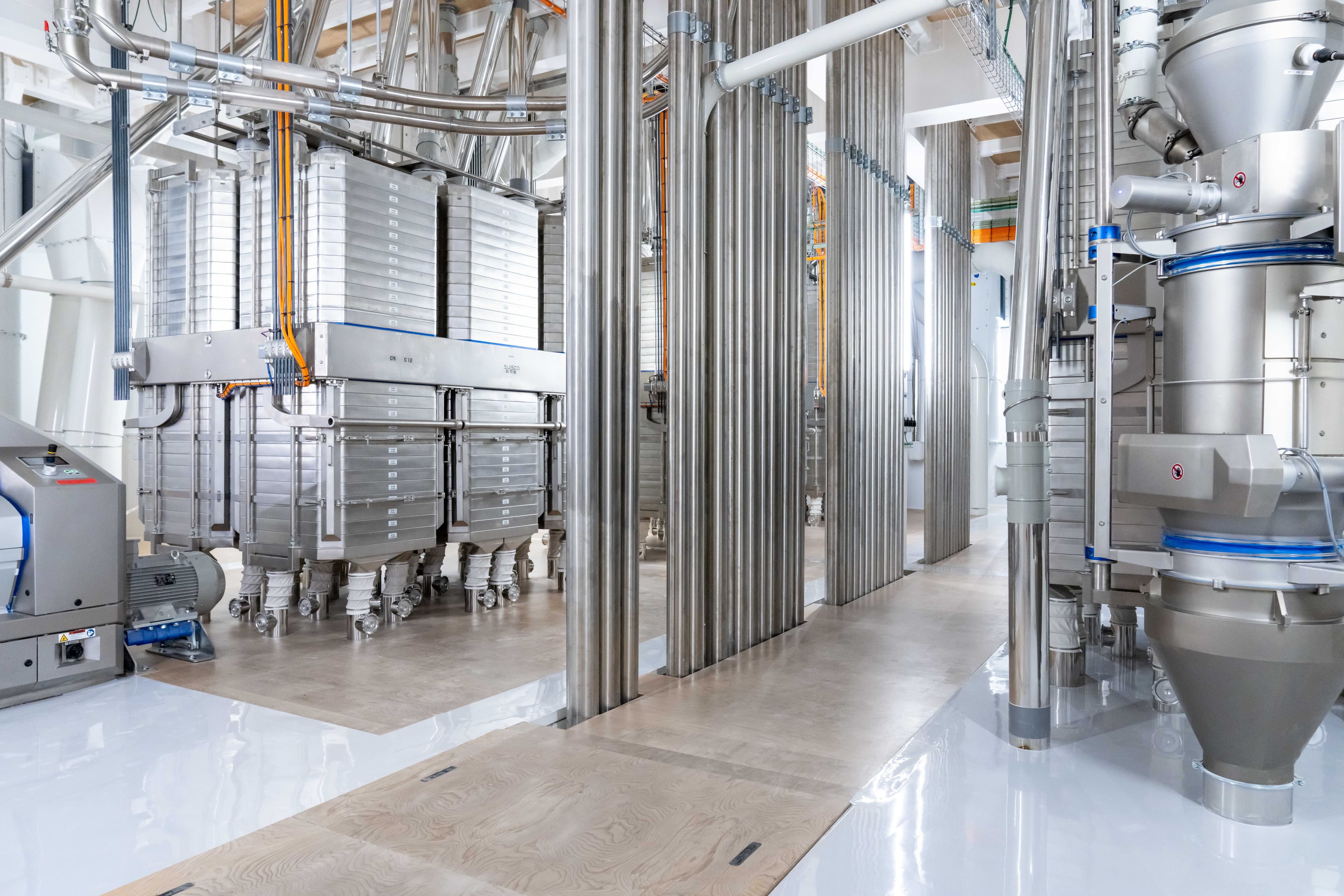
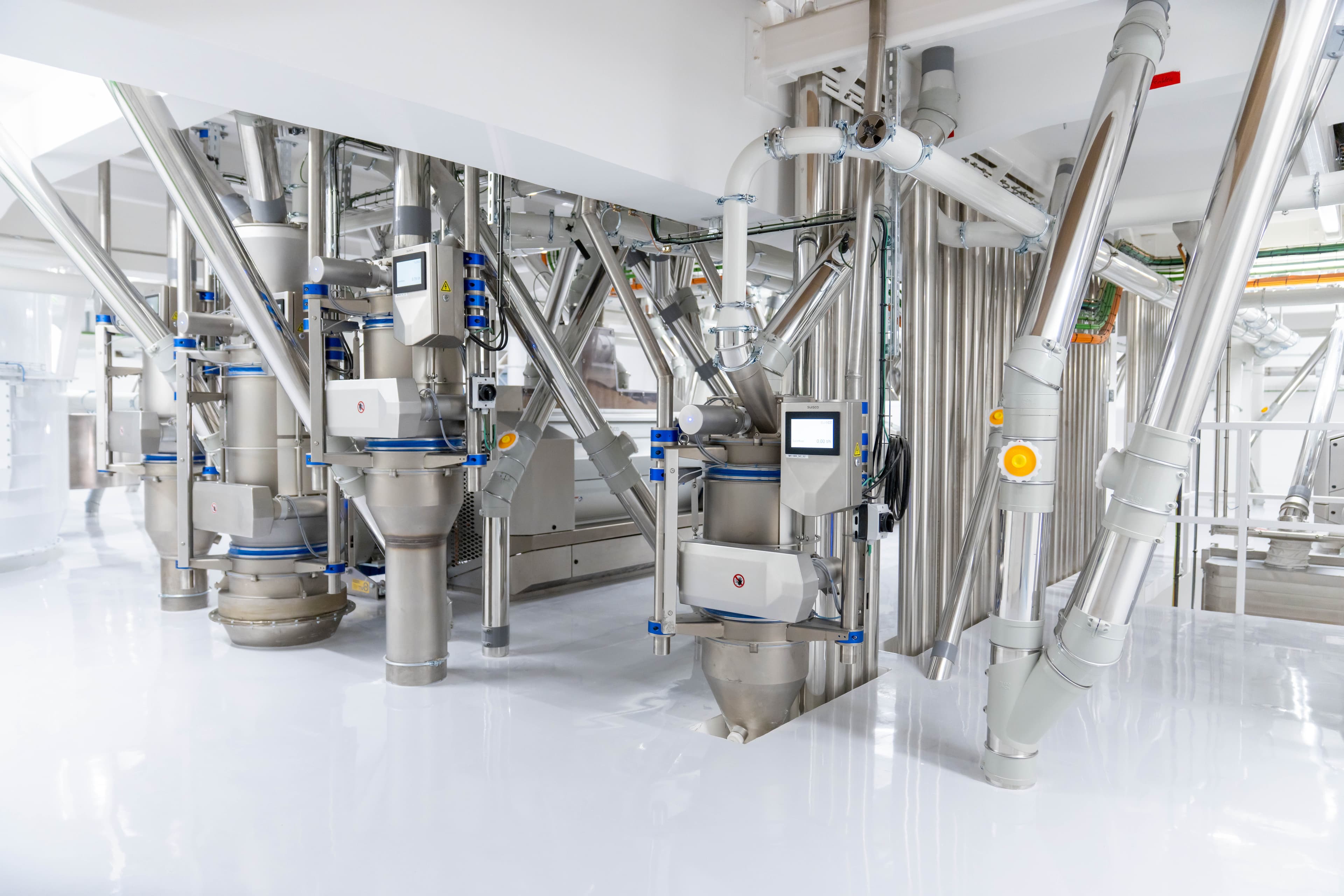
– Gravity instead of pneumatics: By consistently utilizing the height of the building, the concept makes intelligent use of gravity-fed product flows. Pneumatic conveying lines were reduced by around half. As a result, the mill’s energy consumption was reduced by approximately 40%, significantly lowering operating costs over the long term.
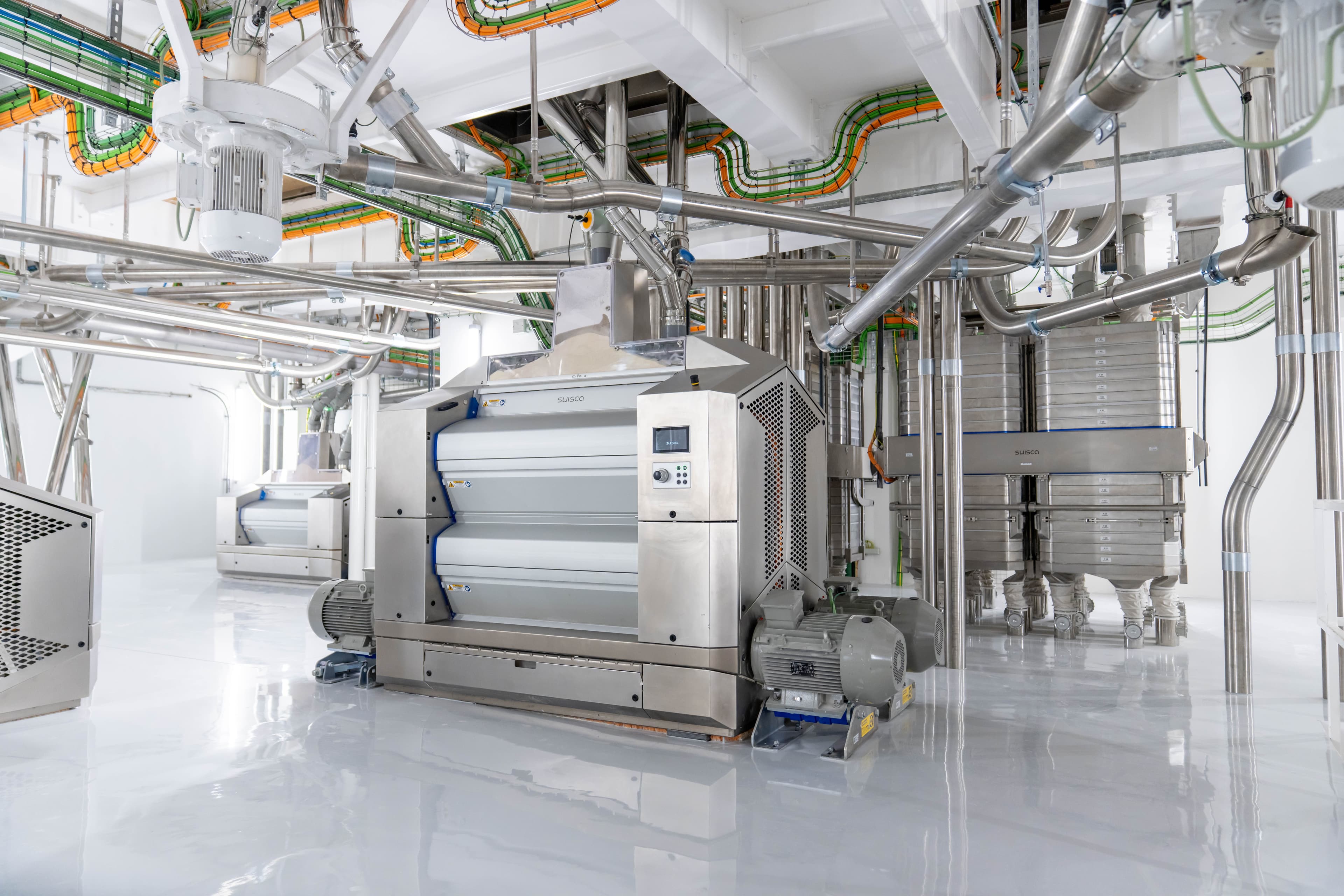
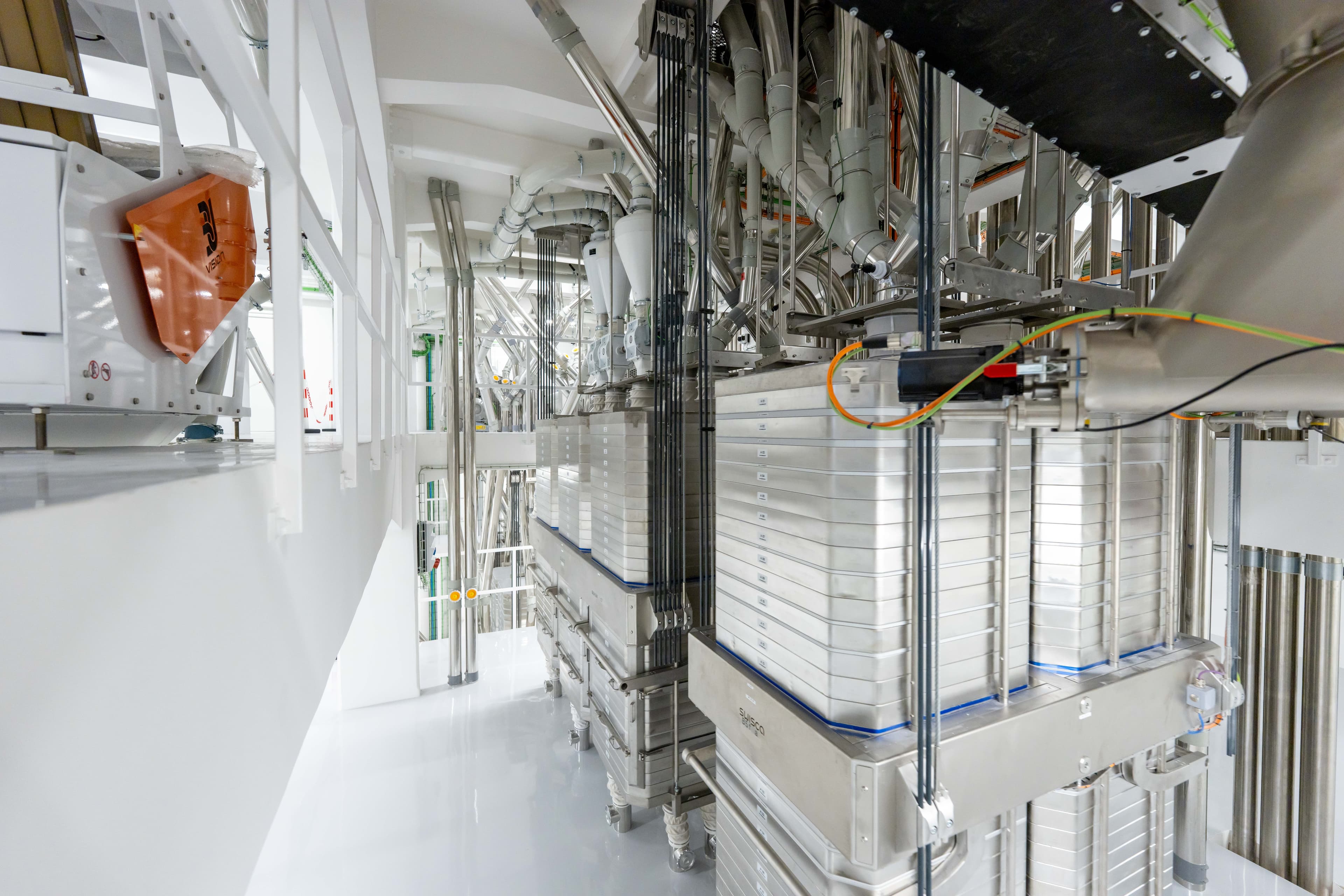
– Modular design: This mill is truly unique – 38 ROMIL units are distributed across 9 floors, while 77 SIFTO modules are installed across 6 floors. This radical plant concept was only possible thanks to the extremely compact machine design and outstanding flexibility of the technology – particularly the SIFTO plansifter concept, which is unique on the market.
– Highest level of automation: Distributing the machinery across so many floors requires intelligent control. The parameters of individual machines and the overall process are monitored in real time, enabling deviations to be detected and corrected immediately. Product flows, grinding gaps and other settings can also be adjusted directly through the plant control system. All of this is essential for optimizing personnel costs and avoiding costly downtime.
– Consistent hygienic design: The installed hardware is designed to prevent product accumulation by its very nature, simplifying maintenance in the already challenging confined conditions of the silo and ensuring consistently high product quality.
Enthusiasm at Milling Forum Europe
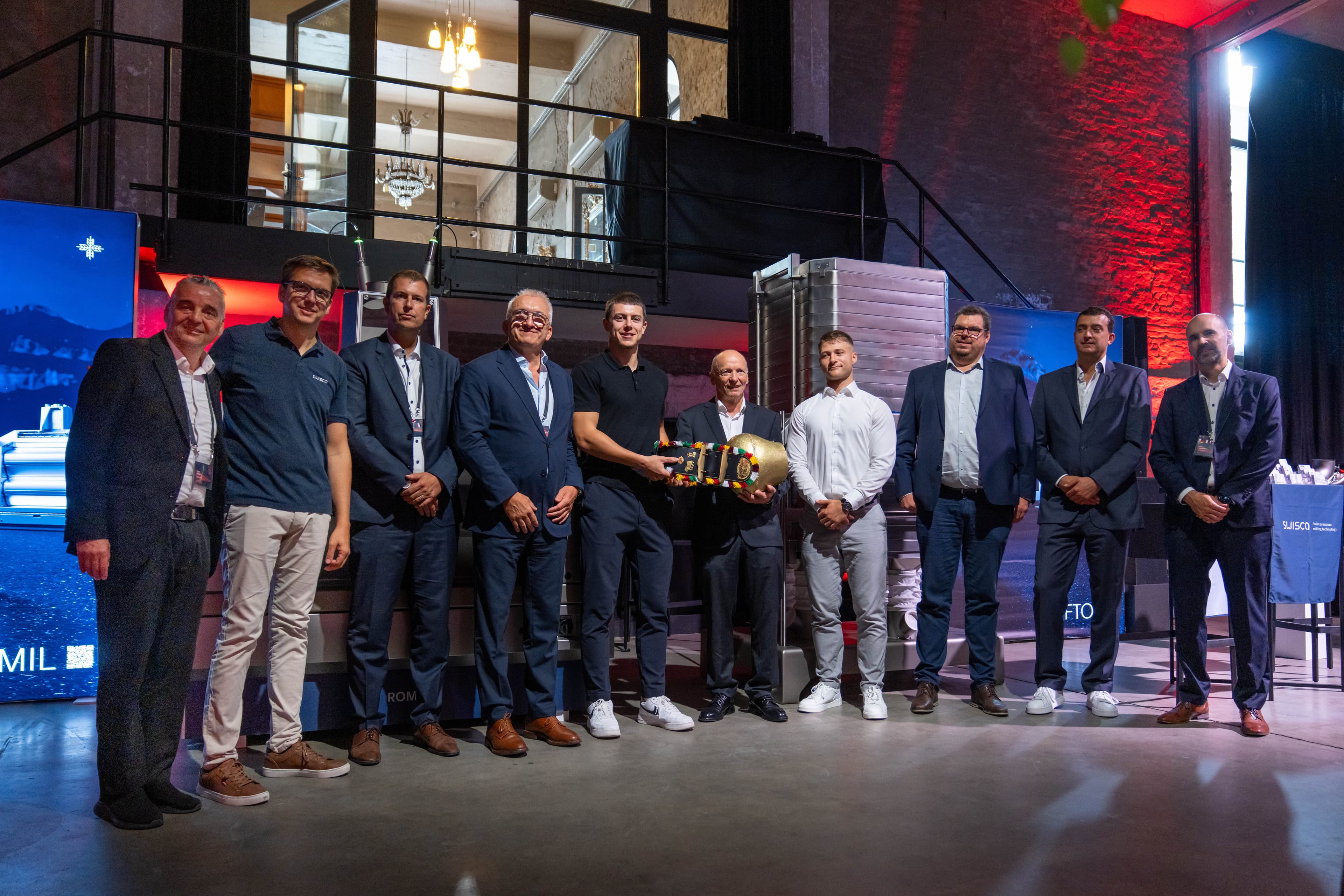
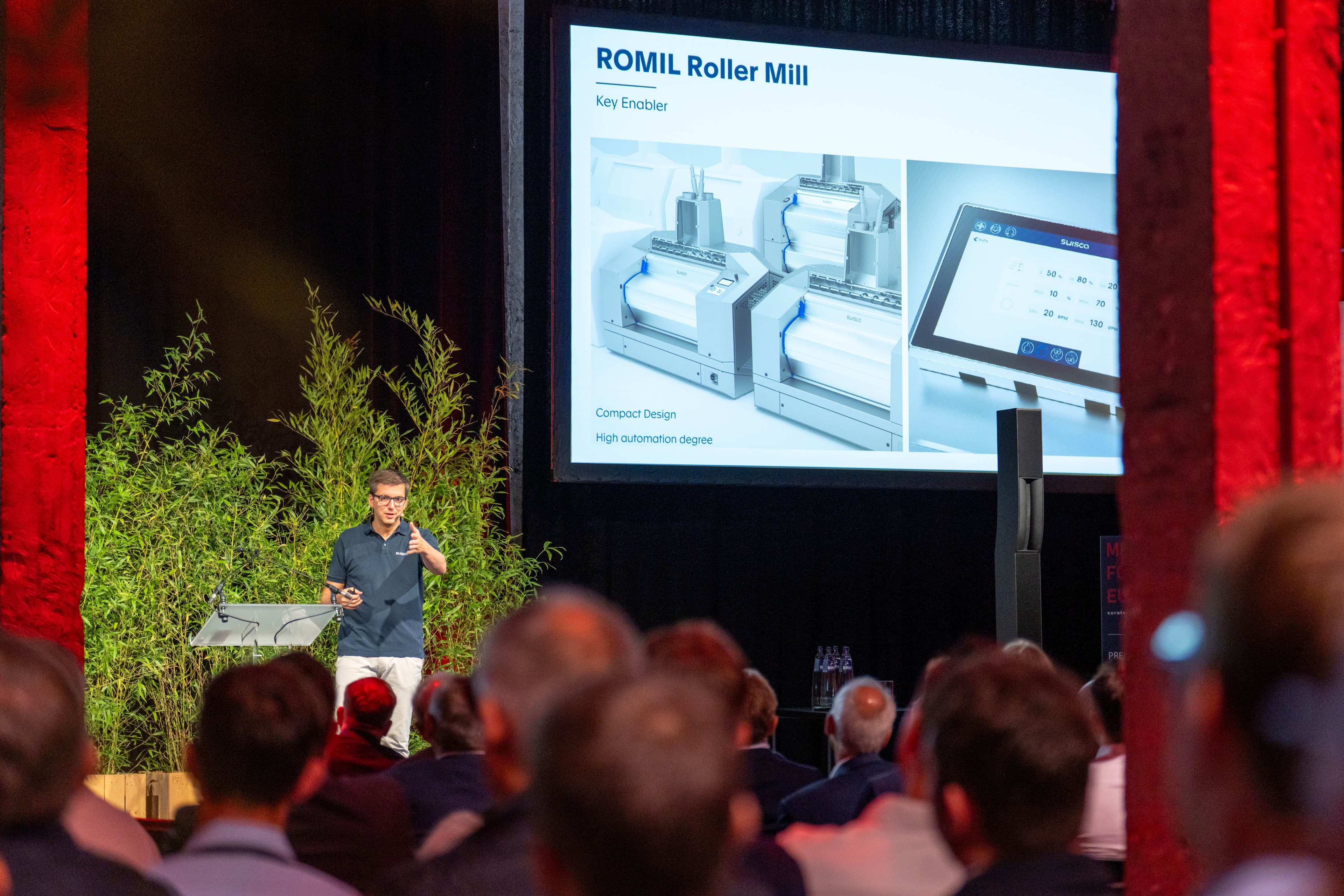
SWISCA recently demonstrated impressively that this technological concept works in practice: from 7 to 9 September 2026, the plant was presented to the public at the first "Milling Forum Europe" in Brussels. The event attracted around 350 international industry experts. The exclusive live tour of the mill, showcasing SWISCA technology in operation, was the absolute highlight of the event for the professional audience.
A milestone for plant engineering in Eastern Switzerland
For SWISCA AG, this project marks a historic milestone in the company’s history. For the first time, the team of around 80 technicians was responsible for the entire scope of services – from milling technology planning and engineering through to the successful commissioning of the complete system.
The CERES Mill is therefore more than a modernized production site. It demonstrates how SWISCA has successfully evolved from a machine supplier into a full-service provider for highly complex plants – a strong signal from Eastern Switzerland that is set to make a lasting impact on the global milling industry.
